Wiki Seguros – 360° Product
Role
Product Designer
Overview
Wiki Seguros was preparing to launch its insurance product and needed a digital ecosystem that allowed users to access insurance information, purchase policies, manage their profiles, report claims, and read the blog. The CMS had to support product, promotion, and content management. The dashboard needed to display KPIs and promotions for the internal team.
Output
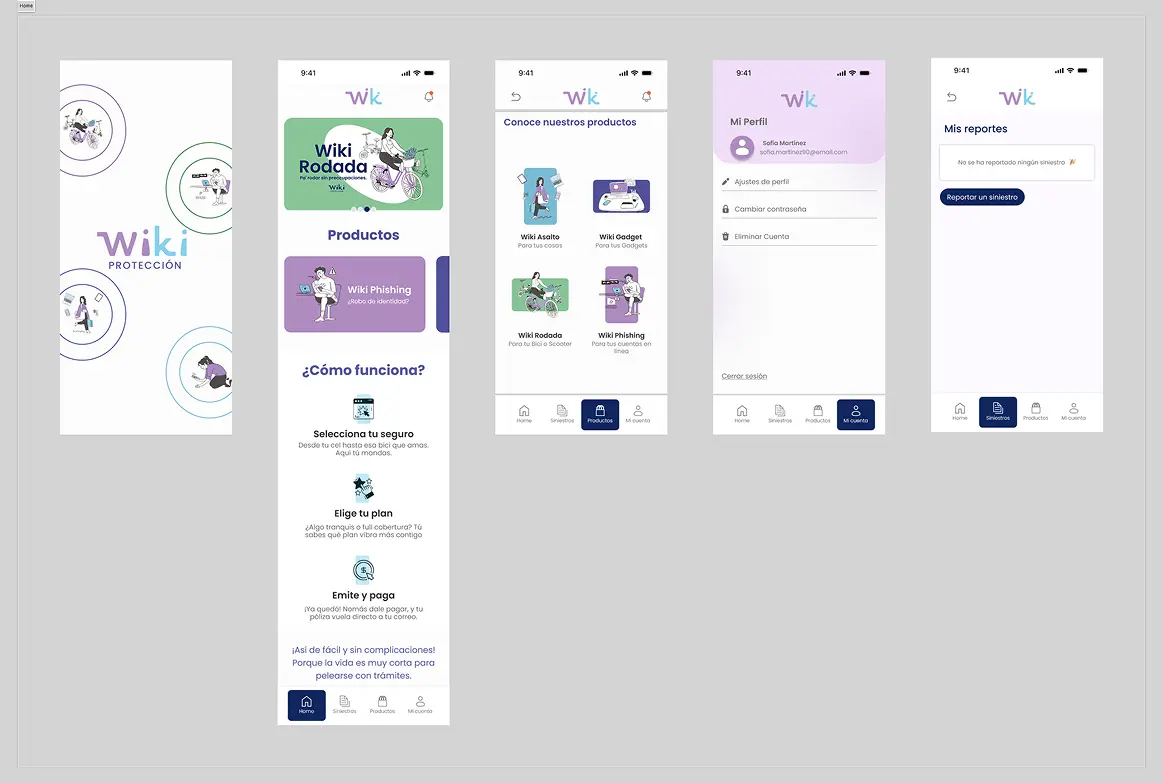
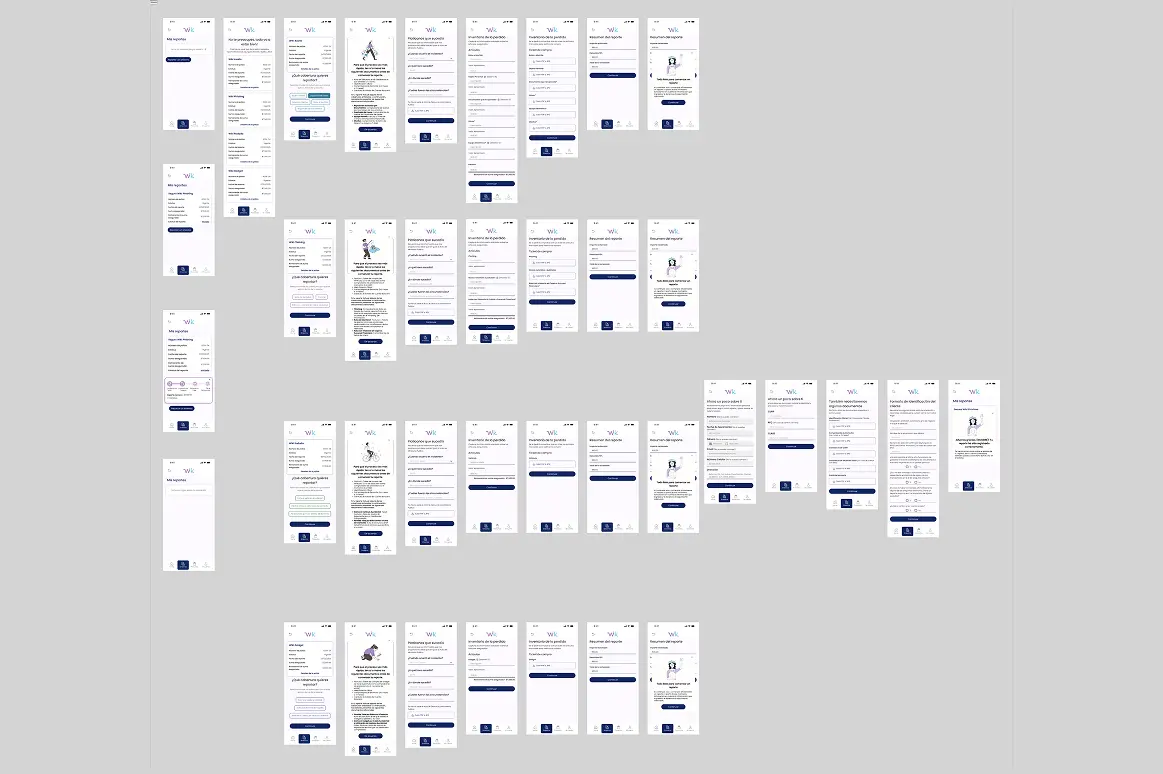
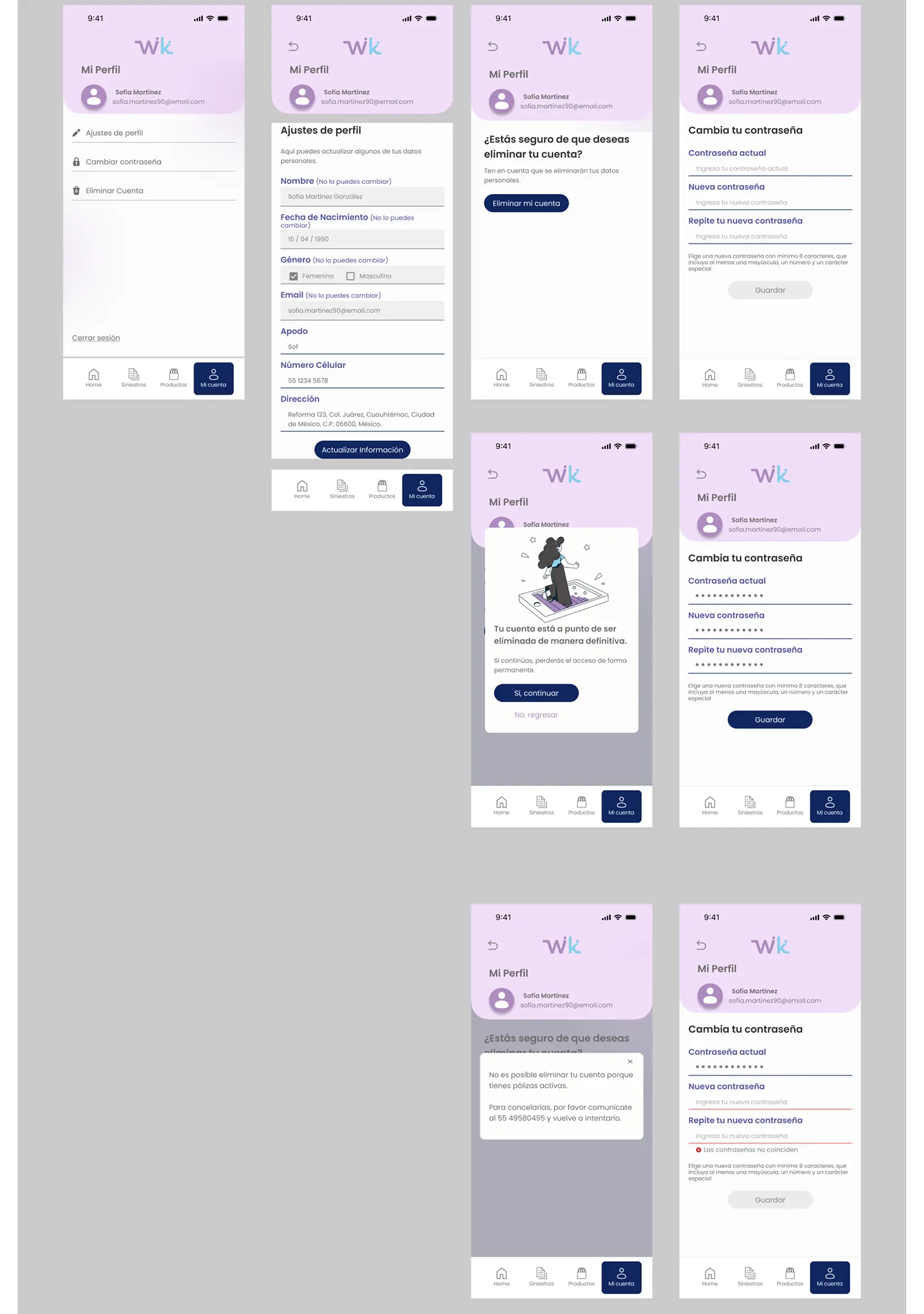
Functional app with insurance purchase, profile management, and claim reporting flows.
Website with clear insurance information and blog access.
Dashboard displaying KPIs and promotions for internal use.
CMS for managing products, promotions, and blog content.
Consistent visual and interaction system across all platforms.
B2C
Challenge
Designing user journeys from scratch across four surfaces while balancing two competing pressures: a primary stakeholder with a vision that didn't always align with the target user's expectations, and the complexity of insurance flows that require extensive user information without sacrificing usability.
Solution
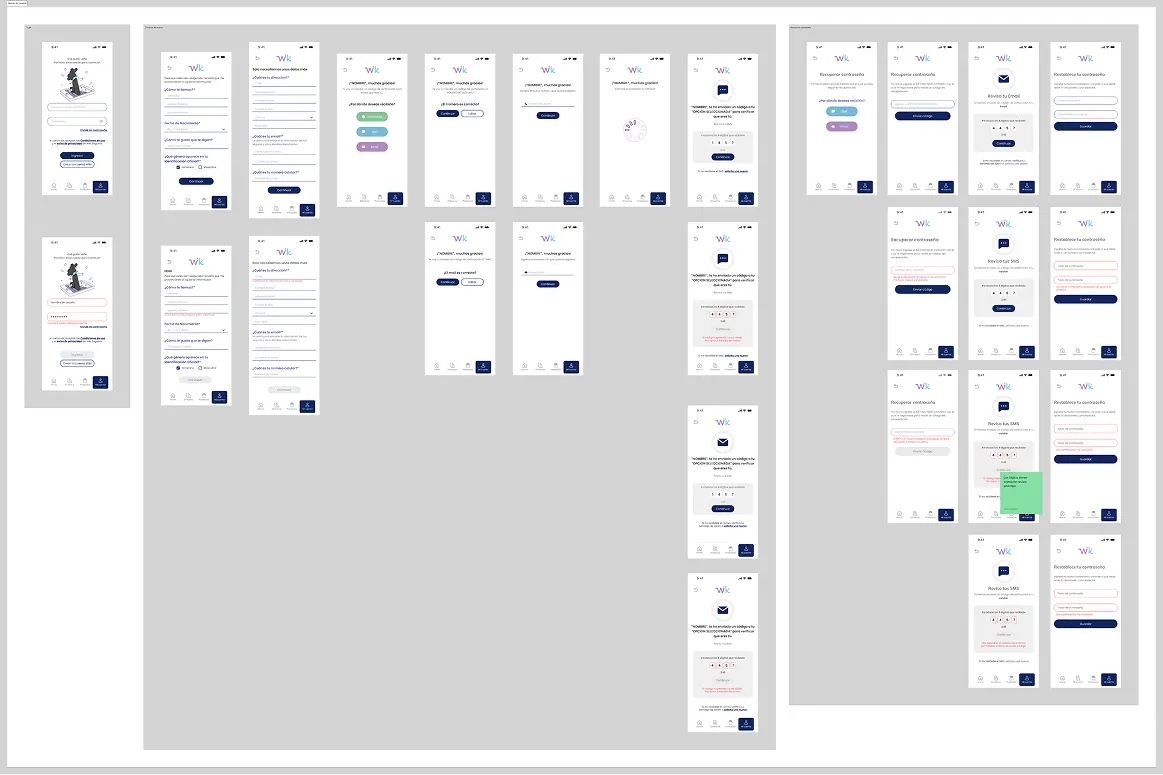
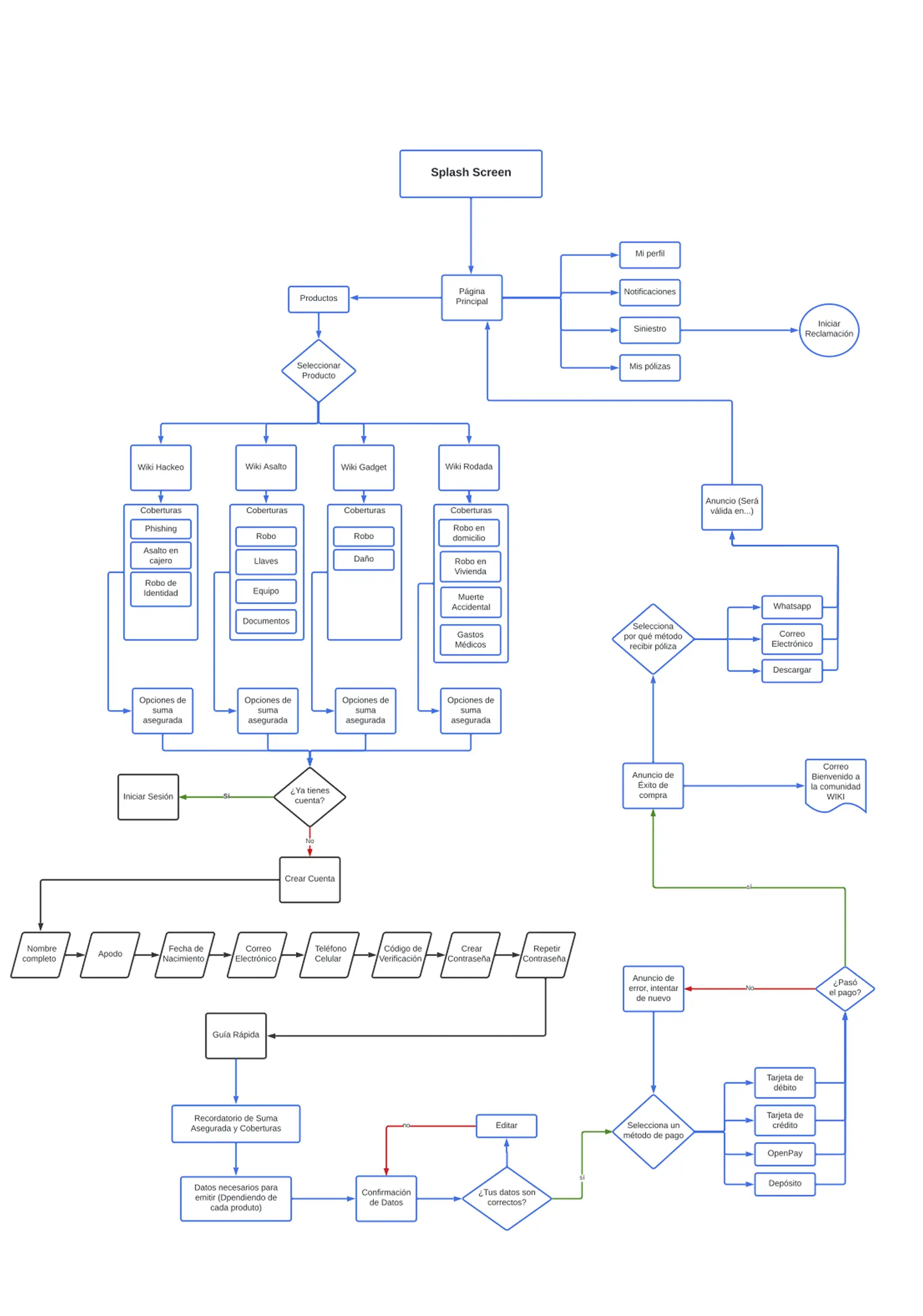
I contributed to the definition of user stories and information architecture together with the Product Engineer, mapping the flows that each platform (app, website, dashboard, CMS) needed to support. For the CMS specifically, I applied a modular block-based approach: each page composed of independent, reusable blocks the internal team could edit, reorder, or toggle on and off without losing data. This pattern came from earlier work I had done on a regulated financial CMS, where separating "hide" from "delete" had reduced the risk of accidental loss for non-technical editors. The website and app were aligned to the same component library to keep visual and interaction patterns consistent across surfaces.
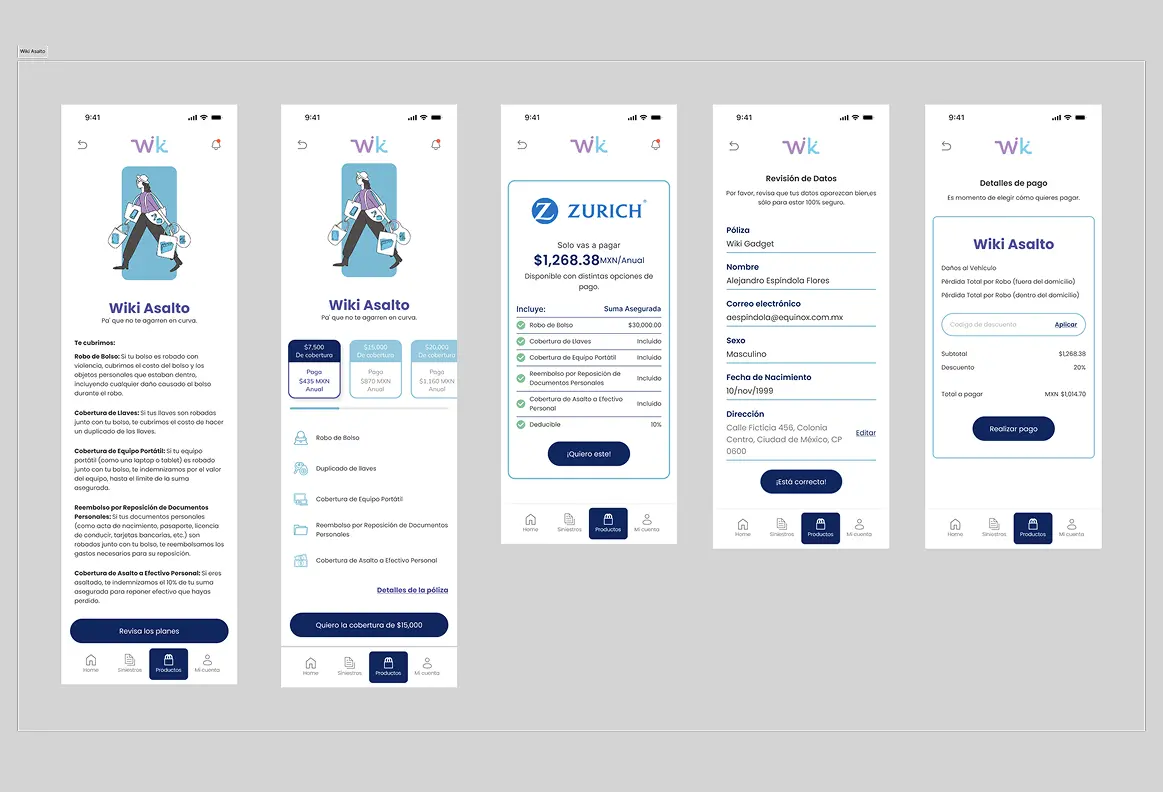
For the product tier selection flow in the app, I applied a carousel pattern inspired by how consumer apps present tiered value: each card surfaces the key details of one coverage level, and selecting it updates the full detail view below. This reduced cognitive load by letting users evaluate one option at a time instead of comparing multiple screens simultaneously.
Process
Research and Benchmarking: Analyzed insurance platforms and digital service ecosystems to identify UX standards and gaps relevant to purchasing, profile management, and claim reporting.
User Story Definition: Mapped key scenarios for end users, internal teams, and content managers to clarify goals, tasks, and constraints.
User Journey Mapping: Designed complete flows for the app, website, dashboard, and CMS to expose friction points and dependencies across platforms.
Wireframing: Structured navigation and information architecture for each platform, focusing on clarity and task completion.
Prototyping and Iteration: Built interactive prototypes, gathered feedback, and refined flows through fast SCRUM-based cycles.
UI Design System: Created a consistent visual and interaction system in Figma to ensure coherence and scalability across all products.
Outcome
The project delivered a cohesive insurance ecosystem across app, website, dashboard, and CMS. Users can complete core tasks such as purchasing insurance, managing profiles, and reporting claims with clear and consistent flows. Internally, the team gained a scalable dashboard and CMS to manage products, promotions, and content efficiently. The shared design system ensured visual and interaction consistency across platforms, enabling faster iteration and long-term maintainability as the product evolves.